BA (hons) Professional Practice

Saturday, 10 December 2011

Inquiry Question- any thoughts?

I am still trying to word my inquiry question, I have an area or topic of interest but need to focus the questions I have previously proposed, as to not make the topic too broad. I have a few drafts below.

  • How do Dancers feel there physical body is involved in experiences, that they feel they have gained knowledge from? 
  • How do dancers students describe the knowledge they gain from doing a dance class? 

I have spoken to Adesola with regards to including the physical body in my question.

'I think that you should look into this because you need to be clear about whether you are starting from the idea that the body AND the mind can generate knowledge or whether you think the body IS the mind generating knowledge.' (Akinleye, 2011)

I feel I was unsure as to what I was suggesting when talking about the physical body but the reason for including the physical body stems much from my earlier thoughts and from listening to Sir Ken Robinson- about value being placed on the mind? 

According to Robinson (2001), “(The) education system has become obsessed with particular forms of academic ability…many people leave education never realizing their intellectual capacities”. It could be argued that a focus on ‘the mind’ alone marginalizes many pupils and ignores vital senses and aspects of the physical body which are also essential to learning. Government strategies, such as All Our Futures, Building Schools for the Future and The Children’s Plan, highlight the on-going debate around relationship between physical knowledge, environment and learning. Although the moving body has “warranted relatively little attention in academia” (Thomas 2003), there remains an ongoing debate within sociology (Connell 2005) and physical education /dance (McFee 1994) about the role of the body in engagement with learning.' (Akinleye, 2011)

In order to clear my thoughts, I looked at literature around the body - 'The Body Social'  Symbolism, Self and Society, A . Synnott.

The first chapter is entitled 

'Body, Tomb, Temple, Machine and self' it quotes

'The Body is the Tomb of the soul' Plato

'Your body is the temple of the holy spirit'  Saint Paul

'The Human body may be considered as a machine' Descartes

'The body is what I immediately am...I am my body'  Sartre

So it is important I understand what I mean by the body because ' how the body is defined both physically and socially, vary widely from person to person, and have changed dramatically over time. ( A. Synnott, The Body Social, 1993)

Taking all this into consideration I feel I should not include physical body in my title as looking into how particular people, literature and myself describe knowledge gained from participation in a dance class, will probably cover areas of the body but not focus the inquiry around it. I am hoping this will prevent my inquiry from becoming too broad.

Tuesday, 6 December 2011

Changing Education Paradigms

Talk from Sir Ken Robinson with added animation, really cleaver. 

Link to YouTube video 

Saturday, 3 December 2011

Pilot Focus Group

I chose to conduct my pilot focus group with three other friends who teach dance, ideally I would have completed a focus group with one of my dance classes but I did not have sufficient amount of time to conduct the focus group in the correct ethical manner and gain consent from all parents. The group of participants had similar experiences in terms of training and varied opinions and were at different levels in their teaching careers, so I believed it to be a good choice of diverse individuals.

Bell states personalities ‘also, influence, and in some cases actually take over, a group and make it difficult for less assertive members to speak.’ (Bell,2005,p.163)

This was the main problem I had with my focus group. Two of the participants were very strong minded and liked to voice their opinions, the other participant was slightly more reserved. I felt this left me with slightly misleading data- as one participant might have sided and agreed with something she may not have entirely agreed with and for this reason I found the focus group difficult to manage. I left the questions fairly open in the fact that I just introduced a topic and asked opinions on how they each viewed knowledge and what they feel they gain from participating in dance. I also had a problem listening to the recording as the stronger participants would often shout over each other- I think because I am a friend it felt quite normal to behave in an overly natural way and this also revealed difficulties as to not let the focus group become a friendly debate. I started to become too involved and voice my opinions. This could potentially have an effect on others opinions and in turn the truthfulness of my data.

Had I time to conduct  a focus group with my class, I would have most definitely insisted on students saying their names first before speaking and to raise a hand in order to speak to avoid the chaos my recording presented.  I do see focus groups as a useful inquiry tool, listening to varied opinions and arguments can aid a researcher in seeing things from other angles and this can lead to an avenue of discovery. Although the pilot focus group encountered many potential problems and so I deem this an effective inquiry tool to use during my research. Interviews will allow the slightly quieter participants to voice their true opinions avoiding the data being somewhat dishonest.

Friday, 2 December 2011

Pilot Survey

I decided to pilot a survey using survey monkey, I think the benefits of conducting a survey is the sheer amount of people you can reach, this allows for a range of views on a topic which is important when conducting research.

I decided to use Survey Monkey to consider how I would source the survey to the right applicants. The question I found difficult was where to go to publish a survey requiring students participation, taking into account correct moral conduct. Posting my survey on Facebook did not increase the response either. I think gaining consent from a school is the most productive way in conducting a survey as face to face has more of an impact.

I found wording the survey questions difficult in the attempt to make them clear they became wordy essays. I chose to have short questions and multiple choice answers. Stephanie made a comment on my blog about including an open question. We both agreed that this often throws you; personally I think surveys should be quick multiple choice and interviews should be conducted to have open discussions on a subject. Although I felt it was important to allow the participant to define the word as it affected the way in which they answered the next question. It allowed me to analyse the data of the two questions, to see if there were any comparisons in the way the word was defined and the next question. Ideally I want to avoid open questions but sometimes it is necessary when considering analysing the data. I like the idea that ‘attitudes can...be ascertained by presenting a list of statements and asking respondents to rate them in terms of agreement and disagreement’ (black 1999, p.227) If I conduct an interview using this method, I will follow up with interviews to investigate further providing density to my research.

I think you have to take into consideration what you want to find out when planning a survey, as they are unlike interviews and observations where you can have topics or vague ideas. Surveys require more preparation before and I assume less when analysing as it is clearly shown in the gathering of data. Stephanie made a good point about including a financial question in her survey; I completed the survey not having questioned giving away such personal information as I could do so anonymously. This is something to consider when conducting a survey, had it been an interview situation I would have felt uncomfortable in sharing this information.

I consider surveys a significant inquiry tool as you are able to reach a wider audience, offering statements will be an effective way in gaining attitudes without making the survey full of open questions, insuring correct preparation and being clear on what I what to discover from the questions will aid in surveys being an effective research tool for my inquiry. 

Thursday, 1 December 2011

Pilot Observation

I chose to keep my observation relatively open, as I wanted to look at how my students participated in class and how they communicate between one another when devising their own work. I chose to be an active participate, as I did not have the time to observe a class, so also for convenience, which I guess is something I will need to consider when researching for my inquiry. I found it hard to maintain a positive position as a teacher, with so many things to consider during a class and to then have to split yourself into two is extremely difficult. Insuring you capture data and take notes is virtually impossible without disrupting the natural flow of a class. Reflecting back on the observation I now consider videoing the most efficient and precise way to record data with the least amount of disruption. Being an observer and a participate was  a conscious decision as I did not want the students to behave differently which I presumed may have have happened had I sat, observed and took notes, I think the balance is to keep it as near to a normal situation as possible in order to observe natural behaviour.

I asked the principle of the school if I could observe the class as well as teach. I explained it was just to investigate the usefulness of the inquiry tool in researching into my own inquiry. Reading the British Education Research Association guidelines has aided me in understanding the ethical issues involved in observing.

I wanted to look at the Kinesics, which is the science that describes bodily movement. Kinesics has given a name to something I just saw as the interpretation of bodily language. My inquiry will look at how people communicate and how their body engages in learning.  Even though I only managed to notate a few  things down about the observations I found it difficult to later start dividing behaviour and events as I had no comparison and for that reason alone I do not think just one observation is going to be beneficial when undergoing research for my inquiry. However I am concerned that if I observe for a week and then analyse the data and repeat this process, I will then be looking for a particular type of behaviour, so this is something I will need to consider.

I have also decided I want to look at different types of dancers so full time regular dance students and once a week students to see if they engage with learning dance differently.
My inquiry will involve both a quantitative and qualitative approach as I will be looking at how and why but also need to understand how much and when something occurs.
I think the most difficult thing about analysing observations is to remain objective about what you interpret something to be, instead of just seeing what you want it to be.

Inquirer as a participant observer

I believe the pros of being a participate observer is that you know how the community of practice works so you can look at areas of interest. It does however mean you can manipulate a situation and make it work or look how you want it to, so again it is not easy to remain objective.

As I have experienced it is difficult to find a balance between teacher and observer but although complicated with the right tools to notate the observations like video recording, you have a valuable position being actively involved in your own research. This type of research is less time consuming as it has little disruption to a normal day, however analysing the videos is where you find this tool time consuming, so time management again will be key. Overall observations are will be an effective and useful tool in aiding research into my inquiry, I will then follow up how I observe or view something, to interview a student and define how they interpret and understanding it.

Tuesday, 29 November 2011

Pilot Interview

I believe my inquiry will take a qualitative approach, although I will be using surveys and quantitative inquiry tools to insure my inquiry questions and research include a high volume of participants. I believe Surveys and observations to be a good starting point for my inquiry, which I will follow up with detailed, more in depth discussions from interviews. My inquiry is going to involve observing dance classes and as Bell states. 

‘You can follow up on these ideas, probe responses and investigate motifs and feelings’ (Bell, 2005, p.157).

This is how I can see my inquiry research undergoing.  I conducted my Pilot interview on a friend whom is a performer and also a teacher. I explained that the information would not be used or published as I was merely piloting the tools, not conducting and analysing research. I choice to have a semi structured interview with four set questions and a few topics to cover to make sure I did not loss direction. Taking this approach allowed me to follow other paths and areas that I may not have considered had I only set structured questions. Non direct interviews may also have this result but interviews are time consuming, although I can see the benefits I also have to be practical. I conducted the interview at my friend’s house; I think it is important to choose neutral ground as it makes all participates feel comfortable, which will insure for a more positive interview without results being affected by the environment or the way the interviewee felt.

I firstly had to decide on my questions all of which had more of an open approach.
I found this process very time consuming although easier than writing questions for my survey probably because they were asking more about how people felt or defined situations. I used one closed question but will mostly use these for surveys.  I felt it would be far more beneficial to let the interviewee have the freedom to freely discuss with me. I was stopped a few times as the interviewee felt I was being misleading. I found it difficult to not be leading when I was given the freedom to follow up on her thoughts, so it might be useful for me to have more set questions in order to remain unbiased.

During the interview I took notes, I should have used a tape recorder as the interview lost the feeling of a relaxed discussion as I could not take notes and participate. I thing tape recording will definitely be the most efficient in capturing data. I have also considered using Skype to conduct interviews, arranging meetings can be very time consuming. Skype allows us to interact instantly, meaning we can arrange interviews at convenient times and increase the amount we do. Overall interviews are time consuming but are going to be a very useful inquiry tool when conducting research for my inquiry.


Sunday, 27 November 2011

Pilot Survey (please complete) and SIG

I know we have previously been interacting via SIG's on Facebook. I feel these seem to have diminished since Facebook discussions have been removed. I do actually think it is far more beneficial to keep all our interaction to a minimum in terms of web 2.0 tools. I can honestly say I have found it difficult to keep track as to where and whom I had interaction with. Maybe we should start a SI blog  and we can just keep going back to it?

As we have been informed it is not advised to conduct any of 6a tasks on anyone under the age of 18 until we gain consent for our research. I have manage to do most but would be grateful if all dance teachers could complete my survey the link is below. 

How are you finding planning and conducting the tools of professional inquiry? 

Thursday, 24 November 2011

Delicious

After reading  Stephanie's blog I have set up a delicious account. I have found the tool hugely beneficial in recording websites and data of interest. It makes storing and filing information together easy and when you want to refer back to a piece of information it is far more accessible. Here is a link to my account, it will be useful to share these as some of us have similar questions, it will help sourcing information easier when pursuing our inquiries further.

Thursday, 17 November 2011

Inquiry Question.

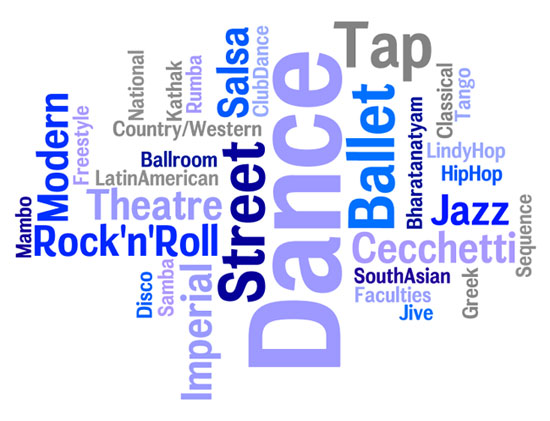
To clarify my thinking around my inquiry, I decided to write down all the words floating around and assumptions and find out why I thought this in the first place, in the hope this might fit everything together like a puzzle. In a way working backwards to go forwards.

This has helped me to look at dance and my engagement in dance, the way it makes me feel and my bodies engagement in learning dance and bodily knowledge.

In the book 'The Body Social' (A.Synnott, 1993) it has a chapter on senses it reads-

Are the senses invalid or valid ways into knowledge? Are they morally good or bad? Are they means or ends in themselves  Are they all equal, or are some more privileged than others? If so why? And most importantly how do the answers to these questions affect how we live our lives? Equally, how does the way we indicate what we think of (or feel) about the senses? Indeed do we live similar or different sensory lives?  'The Body Social' (A.Synnott, 1993).

Reading through this section of the book has made me think about bodily knowledge and dance knowledge, leading me the questions.


What kind of knowledge is dance?

What is dance knowledge?

I think looking back at my previous questions they are all trying to justify dance and its place within education, I already know it is beneficial from my own personal experiences so why not delve deeper, this will allow me explore my assumptions and give me a deeper understanding of myself and my profession. 

Thursday, 10 November 2011

Exploring Ethics

Hobbes (1651) Viewed ethics as a practical solution to social harmony and good through a social contract. (Ethics Reader, 2011) He believed in order to live within a cooperative society; we needed to adhere to a list of moral rules. I guess similarities can be seen in codes of practice and ethical guidelines put in place within education environments to aid in the making of decision and sustain consistently within working environments. As I have blogged about previously these are just guidelines or professional ethics in which to follow it is primary down to your personal ethics and morals to make a decision and consider the impact these decisions have, on not only yourself but on students, colleagues and parents.

Consequentialism as stated by the internet encyclopaedia of philosophy

‘Of all the things a person might do at any given moment, the morally right action is the one with the best overall consequences.’ (Internet encyclopaedia of philosophy, 2011)

If I look at the concept of Consequentialism within my profession, would I ever tell a student he/she could not be in a dance performance because she was not as technically strong as the others dancers and was letting the group and the overall vision and concept of the piece be compromised because of this. I personally could not live with the fact that although the piece would looked stronger, one child would be left feeling inadequate and isolated. The complete opposite to why I think participation in dance is beneficial. I understand that utilitarianism maximises the overall happiness but at what cost?

In retrospect I have been involved in decisions where the consequences of the whole school are considered, but again it depends on the implications of these decisions and how they adhere to my own moral compass. Do I as a teacher make decisions on my class as a whole all of the time? For example if a few students found an exercise difficult would I press on because most had mastered it? Are we then saying if a Consequentialism view was applied in teaching, that some would get less out of a class than other students because I only work on the minority’s level? Can I really work for the ‘greater good’ within an education setting?

Deontology or duty based ethics is in close contrast to Consequentialism, it looks at what people do rather than the consequences, an action is either right or wrong regardless of consequences or purpose. Immanuel Kant (reader, 2011) ‘argued that the only absolutely good thing is a good will’. Demonologists deem it wrong to lie regardless of whether it produces ‘good’. How can we deem an action either right or wrong without considering the intention of the action?

If I tell my younger students, the students in the previous class found a space without talking in 5 seconds and it resulted in the command to be executed as desired, I am wrong in lying? or distorting the truth. In actual fact the previous class had run around for 20 seconds screaming.

It is hard to believe that it could ever be a duty deliberately to produce less good, when we could produce more. (A A Ewing, The definition of good, 1947)

Virtue Ethics is person rather than action based. The reader states that Plato and Aristotle played great emphasis on being rather than doing. (Ethics Reader, 2011)  I think looking at a person’s virtue or moral character makes more sense to me as an ethical concept, how can we just consider consequences or particular actions. Virtue ethics considers people and every person is different with a different set of morals. The problems I see with Virtue Ethics lye in what the virtues are? There is not set list which leaves us with little guidance or structure and even when we have a set list of virtues, they will be relative to the period and culture they were taken from. 

Ethics affects the way in which we behave; it does not give us right answers but on most occasions many. I think this is something I need to consider when researching into my professional inquiry.

Sunday, 30 October 2011

Ethical framework and codes of practice of EDT


After blogging my thoughts on ethics in my work place, I consulted the Essex Dance Theatre – Staff Handbook and Quality Control to establish the ethical framework and codes of practice.

In the handbook it has a section on teaching methods, offering guidelines on overall aims, physical aims, musical aims, use of voice and how to give teaching points and corrections, as well as division of teacher’s attention. These types of guidelines are put in place to achieve continuity throughout the school; every child is different and will view certain  situations differently I believe by having structured teaching methods a child can start to understand boundaries and how a class situation takes place, once boundaries are formed a child can learn in a creative relaxed environment.

There is a section in the handbook entitled -Serve difficulties between staff and student. This looks at serve difficulties of a working relationship between a member of staff and a student and when attitude and behaviour interfere with the atmosphere and working conditions within the studio. It outlines 6 steps that should be taken in order to resolve these issues the first is to try and ensure the issue is resolved in a private discussion at the end of the class. Although there are 6 clear steps in how the issue should be dealt with it still requires both a personal and professional ethical approach. How you actually deal with the situation is primarily down to you as a teacher to solve the issue in accordance with your personal ethics.

The Handbook notes that ‘there are times during any senior students training when the ‘ups and downs’ of growing up mean some students may have trouble with ETD rules and the expectations of behaviour and attitude.’ I think children will always push boundaries in order to establish, build and understand what is right and wrong; this is part of growing up. It is my job as a teacher to be consistent in order for my students to know where to draw the line.

In the code of professional conduct- Fundamental Principles it notes that ‘A tutor should strive for objectivity in all professional and business judgements.’  The word objective is to not be influenced by personal feelings or opinions in considering and representing facts. (Oxford Dictionary, 2011) I like the use of the word strive for, personality I operate whereby my emotions play a huge part in the making of my decisions. Can this be linked to expression and my comfort zones, as I find it easier expressing myself through movement and dance.

A comment Adesola noted on my developing questions was- why academic and practical seem juxtaposed. Looking into the philosophy of the mind and body- my question is can the body affect the mind? 

Reverting back to objectivity and dealing with the facts rather than personal feelings should we, as teachers try to refrain from asking normative questions when dealing with difficulties. By asking factual questions can we eliminate confrontation, as normative questions fuel many opinions on one subject and all are equal and valid? Asking the right kind of question can prevent the difficulties from escalating further- Did you talk when I was talking? As opposed to why did you talk when I was talking?

I would be interested to know your thoughts on the mind and body philosophy? and if you can see any links? I know the mind, body dualism stems from the French philosoher Rene Descartes, so I might need to start my research with him.

Thursday, 27 October 2011

Award Title Rational Revised -

 I have chosen to change my proposed award title after a discussion with Adesola. I think if I were to ask myself what my previous course involved it would be in the training of becoming a dancer and this makes up 2/3 of the degree- in suggesting that my award title be in dance teaching one would expect I had knowledge on pedagogy and teaching techniques, when in fact I do not.

I propose my new award title be less focused and altered to comprise previous training and encompass an array of aspects in my developing career. These may go way beyond teaching methods and I believe be far more engaging. Keeping my award title open will allow my career to take a variety of avenues instead of just teaching.

Therefore I propose my new award title be...  

BA (Hons) Professional Practice (In Dance)

Looking back at the question - What would a pupil benefit more from a highly skilled teacher with little dance experience or a highly skilled dancer with little teaching experience? 

I have to make sure that the question is not just an assumption.  How do I define benefits and how do I define what highly skilled means. Adesola advised I look at the question again as unravelling it will aid me understanding what it is that I actually want to ask or why I assume something.

Reading the ethics reader is assisting me in separating what I am assuming and what it is that I want to find out;  leading me on to other questions. In essence it is less about finalisation and more about the journey in getting to the bare bones of WHAT, WHY you think believe something and then finding evidence to support it.


Assumptions 


Looking back at my question and why I assume there are benefits in a child partaking or having dance available to them in schools. I suppose because I attended The Arts Educational School which as the name suggests was a school specialising in the arts I believe it is beneficial for a child to have access to a variety of education as not all children find it easy to express themselves through conventional education methods. When I was at school I took Expressive Arts GCSE this is rarely an option in main stream schools. This option allowed me to demonstrate a range of issues for example the 1960s  through a variety of different forms presentations, performances, artefact and exhibitions which meant I could demonstrate my skills in a diversity of ways, allowing me to work within a creative environment. A question to propose to parent and pupils could be - Why should dance be part of education?


I recently watched a video on TED where Sir Ken Robinson talks about creativity in schools. I think he made some very interesting points; one was that we are preparing our children for a future we cannot predict. Another was the history behind why the education system seems to value certain subjects against others. He suggests this stems from the industrial revolution which had a profound effect on cultural and economic conditions of the times. The link is below.


Video Link


Monday, 24 October 2011

Ethics 5a

The codes of practice and regulations that define my work place

  • insure all dance studios are save to teach in and have had a risk assessment  prior to carrying out the class.
  • suitable flooring, adequate temperature and changing/ toilet facilities.
  • keep a register of all students in case of emergency evacuation, understand  fire procedures.
  • As a teacher I must attempt physical corrections in a careful sensible manner to prevent injury.
  • To understand that each pupils physic is different.
  • To be aware of any dance injuries prior to starting the class.
  • Have a structured lesson with targets and teaching aims.
  • Have public liability insurance or covered by employer.
  • To be punctual and professional.
  • Confidentiality between pupil and parents.
  • To have health and safety certificate.
  • Apply corrects in a constructive manner.
  • Insure their are rules and  boundaries between teacher and pupils.
  • To teach in a creative, positive atmosphere where their is discipline and guidelines on how a pupil should behave. (Student Handbook)
  •  Approachable and communicate with both pupils and parents.
  • Understand procedures for disciplinary.
  • Lesson plans are of the correct level for the pupils participating.
  • Understand what the regulations are for conflicts of interest.
  • Attend all staff meetings and training days.
  • Make sure pupils are wearing correct uniform and footwear.
  • Make sure you fill in an accident report form if anything happens during class.

I have noted all codes of practice and regulations without research. 

I often strive for just one correct answer to a question and ethics completely goes against this, there is never one set way to behave but their is a correct way to behave but how do we define what correct behaviour is?  Who ultimately decides what is the right way or the wrong way to behave? What I find acceptable from pupils in both their level of input and the way they behave maybe considerably different from another teacher- Fundamentally there are guidelines that are put in place by your employer for you to follow. 


Thursday, 20 October 2011

Award Title

With help from the SIG on Facebook and talking to other practitioners, employers and friends. I propose my final question.

What would a pupil benefit more from a highly skilled teacher with little dance experience or a highly skilled dancer with little teaching experience? 

This has been the source of much debate and seems to tie in all ideas and previous questions I proposed.  Eventually I want to move into teaching dance within the curriculum. At present I teach dance in various dance schools based around the ISTD syllabus and I am completing all major teaching examinations with the ISTD.
 My Knowledge is primarily from a dancers point of view and I am using more than one discipline to contextualise the knowledge- inter-disciplinary. With this in mind and the path I seem to be following, I propose my award title. 

BA (Hons) Professional Practice (in dance teaching)

I have used the word education within my questions and discussions, I could propose my award title as BAPP (in dance education) I think the line is fine between these. Wikipedia defines the term teacher/teaching and education as

  • A teacher is a person who provides education for pupils (children) and students (adults)
  • Teaching is the imparting of knowledge by a teacher or other knowledgeable person.
  • Education in the general sense is any act or experience that has a formative effect on the mind, character, or physical ability of an individual. In its technical sense, education is the process by which society deliberately transmits its accumulated knowledge, skills, and values from one generation to another.

Both are the imparting of knowledge but I want to understand the knowledge a teacher must have in order to be able teach dance and the benefits this has on a child's development. I believe my award title sums up my previous experience and acquired knowledge, this will enrich my current knowledge and deepen the understanding of my profession even further to enable me to be more competent teacher.


Tuesday, 18 October 2011

ISTD and Education

I have just spoken to a friend of mine whom I trained with; I put forward my questions and asked her thoughts on the term education. This is something that she finds really interesting and she informed me that they are converting the ISTD (The ISTD is a leading dance teaching and examination board offering training courses for people wishing to become certified dance teachers) syllabus and grading it with the national curriculum guidelines, she also informed me they are an awarding body recognised by the qualifications and curriculum agency.

I think these findings have made me feel more secure in using the word education in my award title as I teach the ISTD syllabus in both classical ballet and modern theatre dance. 

Developing my Question, with my Professional Community


I seem to be going around in circles with my questions at the moment, I know the direction I want to go in but I cannot seem to decide what angle to approach it from. I took my questions to another very talented teacher whom I work alongside. He has years of experience within the industry and as a teacher. David has also completed this BA, very small world.

I put to him the question what kind of education is dance? His reply to this question was how would I obtain research if I did not work within a state school? This module is about researching and gathering information to support your inquiry. It is better to be able to access an array of information and inquire about something you are actively involved in.

My question is -Does Education have to be based on state schools? The Wikipedia definition for Education is

‘Education in the general sense is any act or experience that has a formative effect on the mind, character, or physical ability of an individual. In its technical sense, education is the process by which society deliberately transmits its accumulated knowledge, skills, and values from one generation to another.’

I believe both professional and vocational dance education can be provided by both public and private sector institutions. Knowledge is acquired through education regardless of institution.

I asked David- Where is dances place within the education system?
David reminded me not to ask a question that I already know the answer to or have a firm opinion on as this will close my research and further development. Ask questions that open doors and lead on to other questions. Just because you decide on a question it does not mean it will be the only one. I think it is important that my inquiry is not taking place to defend my profession but to deepen my understanding of it.

David- How will this topic help you in what you do? For me it is about deepening the understanding of my professional to become a better practitioner. I want to understand the benefits dance has on a child’s overall development. 

I think talking to David has helped me to rethink the direction of my questions and the overall inquiry into them.

I would be interested to know your thoughts on the term Education.

Wednesday, 12 October 2011

Dance Education

After reading Sonal's initial questions and Alan's comments I started to think about the transition from performer to dance teacher, as this questions seems to fit in with my initial question on private dance schools or more so dance teachers having to undertake a degree or even a course on 'teaching'. If Dance is to have a place within the education sector surly we need to take steps in order to assure teachers are not just inflicting good toes and naughty toes on teenage ballerinas.

I personally think the transition between performing and teaching is huge, I know other would disagree. Even though I have studied dance from the age of 6 and have been to a full time dance school and college, have studied anatomy and dance history, along side nutrition and music. I am still completing a course with the imperial teachers of dance to maintain and improve my level of teaching. Most importantly as a dancer to transfer the tatic knowledge into learning, to explain why or how you change a move and transfer it into another dancers knowledge or learning. In the reader it states that a dancer who is also a teacher has inter-disciplinary knowledge because more than one disipline is being used to contextualise the knowledge. I do believe this type of knowledge is invaluable because you have a varied view and a wider outlook of knowledge to form your teaching on, because like teaching there is no limit to learning and this means we never know what might arise within an teaching situation.

However I do believe if it were compulsory to undertake a course, that was recognised throughtout the education sector, we would start eliminating the views of dance being a softer subject. MPs are now defending these comments Nick Gibb states some interesting facts in his talk about the role of dance within the education system. The link may be of interest to any one looking at dance education.

Reverting back to my professional inquiry and developing questions and the thoughts of Judi Marshall describing her process as 'self reflective inquiry' (Marshall, 2001) Every time I walk into a class I have questions when I leave a class I have even more questions, I like the idea that she suggests in questioning we are always inquiring. I might start writing my questions down as not to lose them in my days events and these may help expand and finalise my initial questions.

Going back to knowledge and the idea of university or college knowledge being disciplinary knowledge because there are boundaries and transdisciplinary when we cannot pigeon hole the knowledge. I would say that I work within a disciplinary situation but my knowledge is inter-disciplinary because it is characterised and formed from more than one discipline. I have started reading 'The Art of Dance in Education' as this looks at the relationship between these two types of knowledge.

From this mass of thoughts I have re asked myself what I want from this course and what I need to deepen and enhance the understanding of my profession. From reading Adesola's blog 'First Tasks' I have come the conclusion that it is not an answer I require but a deeper understand of a subject that plays a huge part in my professional practice and is of great interest to me.


What kind of Education is dance? and how can it be beneficial in a child's education development?

Thursday, 6 October 2011

Developing my Questions...


Adosola directed me to an article that has proved to be immensely valuable in taking my initial questions further. The telegraph published an article in which dance was quoted as being a ‘softer subject .’ Mr Willetts believes that core subjects like mathematics, English, languages and science should be seen and noted as being somewhat higher or more valuable within the education system.

My current thought process has led me to explore the question ‘where is dances place within the education system’?  

If we continue to listen to the views of Mr Willetts back in the 20th century. A comment was made on the article that took me back to Howard Gardener and the theory of multiple intelligence; I note bodily kinaesthetic intelligence is noted as INTELLIGENCE is it not?  An A level is an A Level regardless of whether you part take in it actively or practically and it is the thinking of people like Mr Willetts that brings me to keep asking this question. What does he base his thinking on? The arts and the media sector are surging, so it cannot be employment.

On the contrary I have had several discussions with practitioners, lecturers and friends about whether subjects like Surfing being studied at degree level are just pointless and have no real place within society, I believe that we have now introduced degrees and A levels in all manner of subjects and to me these seem to be rather ridiculous.

Recently I had the pleasure of working with a lady who had a PHD in strip tease.  I completely underestimated this art form and thought I could learn a burlesque dance in an hour, not only did I listen to an hour’s history lesson on burlesque but learnt the most intricate of movements that for even a dancer were very difficult. I do not think anyone has the right to label a subject as ‘soft’ unless they have actively tried it themselves.  What are your thought on this subject?   

What would I be achieving if I researched this question? And whom would benefit from my research? are questions I need to look into.

If we understood the benefits dance has on a child’s development would this shift the way dance is was viewed by others? 

Sunday, 2 October 2011

Initial Questions

As I move further into my career as a dance teacher I have found that questions have started arising quite naturally, here are my initial thoughts.

  • How can dance aid in the learning of other more practical subjects?
  • What effects can dance have on a child's educational development?
  • How can we insure that private dance schools maintain a high and safe level of teaching, if it is not compulsory to be part of a teaching body or have some sort of teaching degree?
  •  Where is dances place within the education system? 

At the moment some of my questions are to personal, I do not want to start an enquiry with a rant. I also believe the questions are a little to vague but all interlinking. I am going to start a SIG on facebook titled 'Dance Education'.

Friday, 22 April 2011

Sources of Information

I have struggled Identifying just 5 of my networks and so I take the word current and this allows me to recognize those sources that are valuable to me at present, this is important to consider because what may be of great value at this point in my career and life, may prove to be unrelated and insignificant as I progress . I note this because as I embark on a career as a dance teacher my networks at present are about attaining more work as a ballet and modern teacher. When I have achieved this they will be about demonstrating and finding teaching methods, that work for me in the teaching of my students. I also think it is important to remember our web based tools are shifting and developing constantly, for example MySpace was one of the first web 2.0 social networking sites that was slowly replaced by Facebook, leaving MySpace to grow to be a platform for music, bands and soloist to display their talents, was this the original vision?
I have previously blogged about how I found the web complex because of the sheer amount of information available, so it has been important for me to learn new tools in sourcing information. Through the community network the BA professional practice has constructed, I have learnt and managed to actively put these new tools into practice. Filtering and being able to connect with relevant information has been advanced by, bookmarks, feeds, favourite bars and blogs. I also now reflect on action while working and access how productive I am being, as I now realise now vital it is to have self control.
I am sure you all appreciate how difficult it is to instigate and locate networks of importance, when you change career path. Joanna mentions how she is focusing on presenting rather than acting, she goes on to state. By putting myself out there a bit I have been able to make some contacts that are great sources of information. In regards to what is ‘out there’ and how to go about developing myself as a presenter. (Adeyinka, 2010) I think one of the most important sources of information is talking to people, I mentioned in my affiliation blog that I can often isolate myself which has no benefit in my progressing and attaining new information.  I have started to ‘put myself out there’ ask, question, discuss, form debates with people, these new networks have opened up communities of practice. These have been my backbones in starting a career in dance education.  I’m currently deepening my understanding and knowledge within the ISTD community and I'm an active member in an employee’s new dance school, We came together through ‘shared vision’ (Durrant, 2010).

I have noticed the importance to numerous students of ‘the Stage’ and ‘The Dancing Times’ Sandra left a comment on Nicolas’s blog about how we can access The Stage and The Dancing Times electronically via the library. Although current issues might not be available immediately, this is a free resource. In relation Ross mentions in his blog that the articles keep him in the know on current topics in and around performing arts. I also stay current in my field with the TES magazine, it is important to have a broad knowledge of  your profession, It means that you can hold your own and have an opinion on an array of subjects and issues within it.
I believe that one of my most important sources of information is my i-phone, although it’s not a source itself and I access core sources through it, it allows me to talk and view information immediately which is so important. I have been in situations where I need to look at breakdowns, access timetables and contact a network directly, so this is a source that allows me to stay connected at all times. Through this I can access my emails that are equally as valuable, in sending information and contacting and maintaining weaker links in my networks. I believe this is far more professional than messaging them on facebook. To summarise below are my 5 most current important sources of information.

  • Communities of practice 
  • Email
  • TES magazine
  •  Phone 
  • Talking to people

References
Durrant, A. (2010) The Networked Professional Reader.

Thursday, 21 April 2011

connectivism

Connectivism argues that teachers, experts, books, websites etc.  are all in fact points  (or nodes) in the learners network and that each node provides ‘information’. It is the learner who connects information into the highest schemes that make sense of their experiences.  (Durrant, 2010, p 8)
Connectivism is a theory that I relate to the most mainly because the BA professional practise uses connectivist teaching methods whereby I participate using a variety of technology tools or nodes.

I was interested with Marks comment on Emily's blog; my problem with connectivism is some quotes talk about 'learning' existing in the world rather than the individual. It's this that I don't agree with. To me learning is about comprehension and understanding and these are personal things that happen within a person (Iles, 2010)
I would argue that learning takes place through connecting with information, it isn’t something we are born with, we attain knowledge through linking our networks and nodes and applying this to our experiences. Web 2.0 and technology have developed at such a pace that our knowledge is rapidly progressing. We can now connect to various nodes and access far more information, as well as a variety of opinions. I can, for example, view opinions on dance teaching from all over the world, these maybe from experienced dance practitioners or practitioners from other educational backgrounds and from a variety of cultures. These add meaning to my experiences and reshape my thinking as I connect the information. I in turn make decisions on how I teach and this is all part of learning.
I do agree that learning is about comprehension and understanding, but how do you form an understanding? I don’t form understanding internally, I connect it externally and then apply it to my knowledge. I believe it is through connecting our nodes and then translating this into understanding.

As a developing dance teacher my ‘small worlds of knowledge’ (Dumais 1997) relate and link with weak and strong nodes, what I have come to recognize is by the process of extraction, I’m making decisions on my continual learning outcomes.
Know-how and know-what is being supplemented with know-where (the understanding of where to find knowledge needed) (Siemens, 2004). Since enrolling on the BA professional practice, I now have a better understanding of know-where. I also believe that having to critically reflect on an array of theories and concepts I have developed my tools in sourcing information. This also allows me to stay up to date in my chosen field and progress when it advances.
Downes states:  to teach is to model and demonstrate, to learn is to practice and reflect. (Downes, 2007) As a practitioner on this course and in my professional practice this quote defines my active teaching and learning. I now understand that reflection plays a huge part in my learning and understanding of myself and my surroundings.  I can only look forward to how connectivism will greatly amplify my knowledge as I deepen the understanding of my practice.
References 
^ Downes, Stephen. What Connectivism Is. http://halfanhour.blogspot.com/2007/02/what-connectivism-is.html Retrieved 2009-01-28.
Durrant, A. The Networked Professional, 2010
http://emilyrose91.blogspot.com/2010/12/connectivism.html?showComment=1292164143877#c369475556226676348

Tuesday, 19 April 2011

Social Constructionism

Social constructionism is the way that we as humans construct meaning of the world through our experiences in a social context. I understand that my networks are all constructed and that various networks may have multiple ways in which they view and construct meaning. Drawing from my own experiences, I often enter new networks not knowing how I will engage with others or how the network will benefit me, what one network constructs on dance discipline the other may contrast in view, which gives me a collection of experiences for me to draw my own conclusions. I explored social constructivism which focuses on an individual's learning that takes place because of their interactions in a group, in my previous blog exploring web 2.0.
 When entering or constructing new networks I now understand that there meanings are not set or predetermined and I have an active role in there construction, as they are continually evolving. ‘As writers like Merleau-Ponty have pointed out tellingly, the world and the objects in the world are inderminable.’ Crotty, M (2005 pp 42-44)
This brings me back to the ‘polymath’ idea introduced on Stephanie’s blog that refers to multi-talented, multi-tasking creatives as 'polymaths'. I have mentioned my passion for working within community organisations and through my involvement with the W.I, I have entered and constructed many new networks. These networks started with loose ideas and themes but through interacting numerous meanings have evolved. I feel that society is moving forward and we no longer have just one professional, this in turn means we will interact and move in and out of various constructed networks and thus have a broader knowledge outset of the world, so the more I expand my networks the more I can create multiple meanings.

W.I Meeting


References
http://stephaniethomas-blog.blogspot.com/2011/03/inquiry-task.html
Durrant, A. (2010) The Networked Professional Reader.
Crotty. M (2005) The foundations of social research: meaning and perspectives in the research process. London: sage

http://missnicolecarman.blogspot.com/2011/02/exploring-web-20.html