Are you including your interview transcripts with your critical review?
Thanks
Monday, 7 May 2012

Wednesday, 2 May 2012
Help!
I have looked on the Harvard referencing page but cannot seem to find it, just wanted to know if anyone was able to help, if I am quoting Martha Graham in Freedman's biography would I but (Freedman, 2006, p.20)
or
is it a secondary source, I mean it isn't in terms of another book but it is not Freedman's words but Graham's.
Also- professional artefact does it need a explanation page? I mean mine is pretty self explanatory-how is it presented as I have done mine online?
Finally do I need to reference images from Photobucket? AND can you use images from Google? or do we have to consider copyright?
Finally I am a few words over it states in the handbook +/- 500 words is this correct?
If anyone can help greatly appreciated.
Tuesday, 24 April 2012
Professional Artefact
My initial idea for a professional artefact was to present a Prezi- presentation to teachers and dance students to explain my finding. Within the presentation, I wanted to include a video of myself dancing, images and a experiment, in actions evoking emotions. I am now unsure of this idea and cannot decide whether it will be useful in explaining the inquiry. Has anyone decided on an artefact? What are your thoughts on my idea?
www.prezi.com this is the website if anyone has any thoughts on my idea.
The video below is a talk about dance and how it is evolving in the internet age, just thought I would include this as I found it really inspiring.
www.prezi.com this is the website if anyone has any thoughts on my idea.
The video below is a talk about dance and how it is evolving in the internet age, just thought I would include this as I found it really inspiring.
Tuesday, 17 April 2012
Brain Wave
I had to share this moment with my fellow students, as I have just understood part of my inquiry which I guess seems somewhat strange but my brain has finally took in a part of dance and knowledge and I have formed an understanding of dance and actions, senses and the body, it all seems to make far more sense. It is almost as though I have crawled through the inquiry to form an understanding!! Finally!! I thought my brain was going to explode!
Tuesday, 27 March 2012
The Lived Body
I have chosen 'Dance and The Lived Body' as literature to aid my inquiry, Sondra Fraleigh talks about how dance always reflects life and does this because it is the lived body through which we express it. All of my interviewees talk of drawing from life experiences to involve emotion, I am considering whether dance will always have emotion because it is always reflecting our own life experiences and emotions no matter how abstract.
Another interesting topic is whether we have an action or movement first or is it an emotional or are they both enacted simultaneously? I believe most would say feeling comes before an action but what if an action gave us a feeling or emotion. William James a Psychologist and Philosopher would argue that 'you feel sad because you cry'. Martha Graham uses a beckoning action, this she hoped would instigate an emotion. One of my interviewees mentioned that each dancer would then draw from their own experiences of the world they had lived in and the sensory experiences they had lived and merge this into the movement. I wanted to know what other dancers felt about this? Often we ask a dancer to feel something when we are teaching and add emotion to the piece.
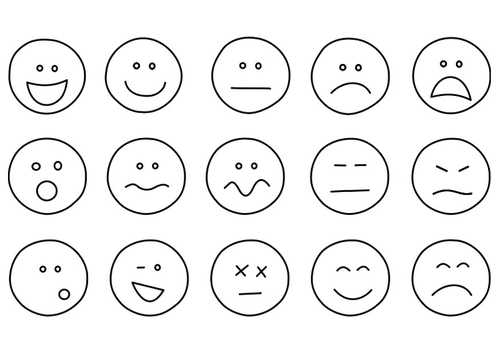
Another interesting topic is whether we have an action or movement first or is it an emotional or are they both enacted simultaneously? I believe most would say feeling comes before an action but what if an action gave us a feeling or emotion. William James a Psychologist and Philosopher would argue that 'you feel sad because you cry'. Martha Graham uses a beckoning action, this she hoped would instigate an emotion. One of my interviewees mentioned that each dancer would then draw from their own experiences of the world they had lived in and the sensory experiences they had lived and merge this into the movement. I wanted to know what other dancers felt about this? Often we ask a dancer to feel something when we are teaching and add emotion to the piece.
Friday, 9 March 2012
The Light Bulb Moment!
As I mentioned considering what contemporary dance means and how it is defined has been a small but valuable question and has led me to view my inquiry in a new light. I have been consulting literature about my inquiry and felt that I needed not only the descriptions of my interviewees and myself but of others that have made considerable impact within contemporary dance. Most of my interviewees have mentioned Martha Graham and Merce Cunningham, who have both published books on contemporary which include personal thoughts and feelings. Although in hindsight this is a rather obvious discovery it has pushed me forward within my inquiry. I have also had an idea to include a video of myself participating or performing a contemporary dance and use this within my artefact to provide my audience with a visual representation of what I have started to discover.

Wednesday, 7 March 2012
How many doors is it wise to open?
I have now completed all my interviews and re written the recordings into note form, through this process I have started to notice similar ideas and themes, but how many doors is it wise to open? As I previously mentioned looking at the history of contemporary dance and how people define and see contemporary dance is a part of my inquiry, even though this was something I had not previously considered. I have been reading ‘Dance and The Lived Body’ the writer describes dance through her consciousness and through the Existentialism and Phenomenology literature. It has been hard looking for literature on personal descriptions of what dancers feel they gain from participation in a dance class and this book is a descriptive Aesthetics.
I have been looking into philosophy and many theories. Senses and emotions have played a huge part in the knowledge the interviewees have felt they have gained. Although through reading this book as literature based around my inquiry I have to question as to whether I think we have a consciousness something that is unexplainable or unreachable. Some of my interviews have touched on this subject, talking about relating something or movements to past knowledge that cannot be explained, some have even mentioned reflecting and this has again borough me to Dewey, at first I could not see how something not primary dance related or discussed in dance terms could be and would be useful as literature for my inquiry, but my fear is I will get stuck looking into philosophers and theories, Aesthetics or study of senses play a huge part within my inquiry. Another running theme that I have started exploring is the knowledge of one’s self and boundaries it pushes the way it makes you feel and how it is used as therapy to others, so I have started exploring dance movement therapy.
I had a very interesting interview whereby the interviewee explained how she had taught disabled children for many years, she worked with a blind student and use to make her roll into a ball to create a rock and crawl out of positions from underneath her body to try and get her to feel the shapes. I have found this extremely interesting as emotions and senses have been a running theme throughout my interviews, how does it feel to dance with only 4 senses? Could the student actually feel what the teacher was trying to convey. One interviewee spoke about actions/ movements that made her feel emotion- like beckoning. I feel really excited by these diversions in what I originally though would be an inquiry into what knowledge is- but how many roads is it rise for me to follow, I do not what to become lost in my inquiry. Is anyone else having a similar problem?
Wednesday, 22 February 2012
Literature Review and Interviews

I also feel a little lost with reviewing the literature does anyone have any examples or have they read anything that has helped?
Interviews
I have conducted half of my interviews and feel I have learnt so much already, I have taken a more general approach to the interviews and have no set questions. I am hoping this approach will aid me in looking at questions and surrounding topics I might not have considered had I only set questions.
The first interview lasted for an hour and I was feeding off the interviewee, we toughed on various subjects surrounding my inquiry and I became excited by the relaxed conversation, my mind starting flooding with questions from the interviewees responses and I found it somewhat difficult to just stop and actually let the interviewee finish talking. I am now concerned I could have missed answers that may have been valuable.
My second interview was completely different and having managed not use or even look at prompt questions in my first interview I assumed the second interview would follow and have a similar openness. The interview was much shorter and the interviewee found it hard to answer my question and felt under pressure to do so quickly. I decided to stop the interview half way through and we both took 5 minutes. Within this time I starting thinking back to my first interview and the questions I had asked. It is my job as an interviewer to get the best response out of my interviewee and I had to think fast in order to do this. When we returned we were both somewhat more relaxed, I had some set questions to ask, this helped my interviewee feel less under pressure.
I have learnt that you need to be prepared to change what you may had initially planed in order for the interviews to beneficial. Another example of this is when the first interviewee having read the consent form asked me what I meant by contemporary dance? This is now a set question I use at the start of the interviews as a way of opening up the conversation and relaxing both participants. I had not considered this as a question and it could now lead me to another door within my inquiry.
Has anyone any ideas for professional artefact? I would like to do a illustrated presentation/ several images creating a huge image- I just can not work out how this would adhere to the 3000 word count any ideas?
I have also forgot to mention the second interview was done via Skype so maybe this made it feel somewhat less open and comfortable.
Subscribe to:
Posts (Atom)