BA (hons) Professional Practice

Tuesday, 29 November 2011

Pilot Interview

I believe my inquiry will take a qualitative approach, although I will be using surveys and quantitative inquiry tools to insure my inquiry questions and research include a high volume of participants. I believe Surveys and observations to be a good starting point for my inquiry, which I will follow up with detailed, more in depth discussions from interviews. My inquiry is going to involve observing dance classes and as Bell states. 

‘You can follow up on these ideas, probe responses and investigate motifs and feelings’ (Bell, 2005, p.157).
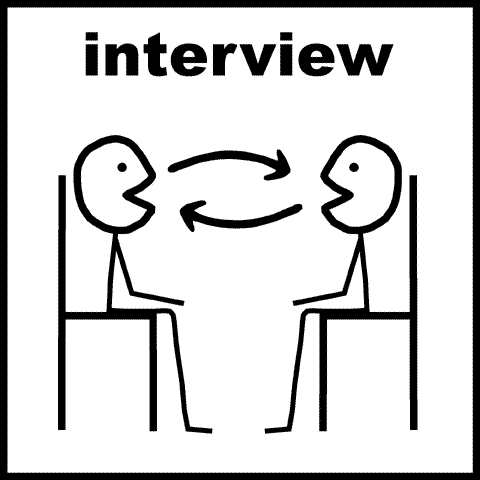
This is how I can see my inquiry research undergoing.  I conducted my Pilot interview on a friend whom is a performer and also a teacher. I explained that the information would not be used or published as I was merely piloting the tools, not conducting and analysing research. I choice to have a semi structured interview with four set questions and a few topics to cover to make sure I did not loss direction. Taking this approach allowed me to follow other paths and areas that I may not have considered had I only set structured questions. Non direct interviews may also have this result but interviews are time consuming, although I can see the benefits I also have to be practical. I conducted the interview at my friend’s house; I think it is important to choose neutral ground as it makes all participates feel comfortable, which will insure for a more positive interview without results being affected by the environment or the way the interviewee felt.

I firstly had to decide on my questions all of which had more of an open approach.
I found this process very time consuming although easier than writing questions for my survey probably because they were asking more about how people felt or defined situations. I used one closed question but will mostly use these for surveys.  I felt it would be far more beneficial to let the interviewee have the freedom to freely discuss with me. I was stopped a few times as the interviewee felt I was being misleading. I found it difficult to not be leading when I was given the freedom to follow up on her thoughts, so it might be useful for me to have more set questions in order to remain unbiased.

During the interview I took notes, I should have used a tape recorder as the interview lost the feeling of a relaxed discussion as I could not take notes and participate. I thing tape recording will definitely be the most efficient in capturing data. I have also considered using Skype to conduct interviews, arranging meetings can be very time consuming. Skype allows us to interact instantly, meaning we can arrange interviews at convenient times and increase the amount we do. Overall interviews are time consuming but are going to be a very useful inquiry tool when conducting research for my inquiry.


Sunday, 27 November 2011

Pilot Survey (please complete) and SIG

I know we have previously been interacting via SIG's on Facebook. I feel these seem to have diminished since Facebook discussions have been removed. I do actually think it is far more beneficial to keep all our interaction to a minimum in terms of web 2.0 tools. I can honestly say I have found it difficult to keep track as to where and whom I had interaction with. Maybe we should start a SI blog  and we can just keep going back to it?

As we have been informed it is not advised to conduct any of 6a tasks on anyone under the age of 18 until we gain consent for our research. I have manage to do most but would be grateful if all dance teachers could complete my survey the link is below. 

How are you finding planning and conducting the tools of professional inquiry? 

Thursday, 24 November 2011

Delicious

After reading  Stephanie's blog I have set up a delicious account. I have found the tool hugely beneficial in recording websites and data of interest. It makes storing and filing information together easy and when you want to refer back to a piece of information it is far more accessible. Here is a link to my account, it will be useful to share these as some of us have similar questions, it will help sourcing information easier when pursuing our inquiries further.

Thursday, 17 November 2011

Inquiry Question.

To clarify my thinking around my inquiry, I decided to write down all the words floating around and assumptions and find out why I thought this in the first place, in the hope this might fit everything together like a puzzle. In a way working backwards to go forwards.

This has helped me to look at dance and my engagement in dance, the way it makes me feel and my bodies engagement in learning dance and bodily knowledge.

In the book 'The Body Social' (A.Synnott, 1993) it has a chapter on senses it reads-

Are the senses invalid or valid ways into knowledge? Are they morally good or bad? Are they means or ends in themselves  Are they all equal, or are some more privileged than others? If so why? And most importantly how do the answers to these questions affect how we live our lives? Equally, how does the way we indicate what we think of (or feel) about the senses? Indeed do we live similar or different sensory lives?  'The Body Social' (A.Synnott, 1993).

Reading through this section of the book has made me think about bodily knowledge and dance knowledge, leading me the questions.


What kind of knowledge is dance?

What is dance knowledge?

I think looking back at my previous questions they are all trying to justify dance and its place within education, I already know it is beneficial from my own personal experiences so why not delve deeper, this will allow me explore my assumptions and give me a deeper understanding of myself and my profession. 

Thursday, 10 November 2011

Exploring Ethics

Hobbes (1651) Viewed ethics as a practical solution to social harmony and good through a social contract. (Ethics Reader, 2011) He believed in order to live within a cooperative society; we needed to adhere to a list of moral rules. I guess similarities can be seen in codes of practice and ethical guidelines put in place within education environments to aid in the making of decision and sustain consistently within working environments. As I have blogged about previously these are just guidelines or professional ethics in which to follow it is primary down to your personal ethics and morals to make a decision and consider the impact these decisions have, on not only yourself but on students, colleagues and parents.

Consequentialism as stated by the internet encyclopaedia of philosophy

‘Of all the things a person might do at any given moment, the morally right action is the one with the best overall consequences.’ (Internet encyclopaedia of philosophy, 2011)

If I look at the concept of Consequentialism within my profession, would I ever tell a student he/she could not be in a dance performance because she was not as technically strong as the others dancers and was letting the group and the overall vision and concept of the piece be compromised because of this. I personally could not live with the fact that although the piece would looked stronger, one child would be left feeling inadequate and isolated. The complete opposite to why I think participation in dance is beneficial. I understand that utilitarianism maximises the overall happiness but at what cost?

In retrospect I have been involved in decisions where the consequences of the whole school are considered, but again it depends on the implications of these decisions and how they adhere to my own moral compass. Do I as a teacher make decisions on my class as a whole all of the time? For example if a few students found an exercise difficult would I press on because most had mastered it? Are we then saying if a Consequentialism view was applied in teaching, that some would get less out of a class than other students because I only work on the minority’s level? Can I really work for the ‘greater good’ within an education setting?

Deontology or duty based ethics is in close contrast to Consequentialism, it looks at what people do rather than the consequences, an action is either right or wrong regardless of consequences or purpose. Immanuel Kant (reader, 2011) ‘argued that the only absolutely good thing is a good will’. Demonologists deem it wrong to lie regardless of whether it produces ‘good’. How can we deem an action either right or wrong without considering the intention of the action?

If I tell my younger students, the students in the previous class found a space without talking in 5 seconds and it resulted in the command to be executed as desired, I am wrong in lying? or distorting the truth. In actual fact the previous class had run around for 20 seconds screaming.

It is hard to believe that it could ever be a duty deliberately to produce less good, when we could produce more. (A A Ewing, The definition of good, 1947)

Virtue Ethics is person rather than action based. The reader states that Plato and Aristotle played great emphasis on being rather than doing. (Ethics Reader, 2011)  I think looking at a person’s virtue or moral character makes more sense to me as an ethical concept, how can we just consider consequences or particular actions. Virtue ethics considers people and every person is different with a different set of morals. The problems I see with Virtue Ethics lye in what the virtues are? There is not set list which leaves us with little guidance or structure and even when we have a set list of virtues, they will be relative to the period and culture they were taken from. 

Ethics affects the way in which we behave; it does not give us right answers but on most occasions many. I think this is something I need to consider when researching into my professional inquiry.